
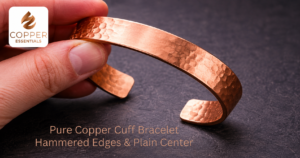
Copper was the first metal ever manipulated by human hands. Long before the glitter of gold or the industrial strength of iron, there was copper. For over 10,000 years, this glowing, reddish-orange metal has been shaped into tools coins and perhaps most significantly, ornaments for the body.
At Copper Essentials, we are not just selling jewelry; we are continuing a story that began at the dawn of civilization. Let’s take a journey through time to discover how copper jewelry has adorned humanity through the ages.
The Neolithic Dawn (8000–4000 BCE)
The relationship between humans and copper began in the Fertile Crescent. Archaeological finds in modern-day Iraq and Turkey reveal that Neolithic people were wearing copper beads as early as the 8th millennium BCE. At this stage, copper wasn’t smelted; it was “native copper” found in its pure form and cold-hammered into simple shapes. These early pieces were likely seen as symbols of status and connection to the earth.
Ancient Egypt: The Metal of the Gods
In Ancient Egypt, copper was more than a decoration, it was a spiritual necessity. The Egyptians associated copper with the goddess Hathor, who represented beauty, love and fertility.
- Symbolism: Egyptians wore copper bracelets and amulets to ward off evil spirits and protect their health.
- Innovation: They were among the first to master the art of alloying copper with tin to create bronze, but pure copper remained a staple for everyday jewelry and medicinal applications.
Mesopotamia and the Indus Valley
As civilizations flourished along the Tigris, Euphrates, and Indus rivers, copper jewelry became a mark of sophisticated craftsmanship. In the Indus Valley Civilization (home to modern-day India and Pakistan), copper was used to create intricate bangles, rings, and hair ornaments. This is where the foundations of Ayurvedic wisdom regarding copper began to take root, recognizing the metal’s ability to balance the body’s energies.
The Americas: The Old Copper Culture
Across the Atlantic, indigenous peoples in the Great Lakes region of North America developed a complex “Old Copper Culture” around 4000 BCE. They harvested incredibly pure copper from the earth and fashioned it into elaborate necklaces, pendants, and bracelets. For these cultures, copper was a sacred material, believed to be a gift from the spirits of the water and sky.
The Middle Ages and the Renaissance
During the Middle Ages in Europe, copper jewelry took a backseat to gold and silver among the nobility, but it remained the “people’s metal.” It was widely used in folk medicine. Traveling healers often sold copper rings to peasants, claiming they could cure the vapors or ease the pains of manual labor, a precursor to the modern use of copper for arthritis.
The Modern Revival: Art Deco to Today
The 20th century saw a massive resurgence in copper jewelry, particularly during the Art Deco movement and the mid-century modern era. Designers like Jerry Fels (Renoir Copper) made copper jewelry a high-fashion must-have in the 1940s and 50s, prized for its warm glow and ability to be sculpted into bold, geometric shapes.
Today, we are seeing a “Back to Basics” movement. As people become more conscious of sustainability and holistic health, copper has returned to the spotlight.
Why the History of Copper Matters Today
When you wear a piece from Copper Essentials, you are wearing a material that has been:
- Tested by Time: A metal that has adorned queens, warriors, and healers for ten millennia.
- Culturally Significant: A symbol of protection and vitality in nearly every major civilization.
- Naturally Sustainable: A resource that our ancestors respected and that we continue to treasure today.
Own a Piece of History
Our handcrafted jewelry honors these ancient techniques while fitting perfectly into a modern wardrobe. From hammered textures reminiscent of the Neolithic era to sleek, contemporary designs, find your connection to the past by Copper Essentials.
Frequently Asked Questions:
Q: When did humans first start using copper for jewelry?
Humans began using copper for jewelry as far back as 8000 BCE during the Neolithic period. Archaeological finds in modern-day Iraq and Turkey show copper beads being worn as ornaments over 10,000 years ago.
Q: What did copper jewelry symbolise in Ancient Egypt?
In Ancient Egypt, copper was associated with the goddess Hathor, representing beauty, love, and fertility. Egyptians wore copper bracelets and amulets to ward off evil spirits and protect their health.
Q: What is the connection between copper jewelry and Ayurveda?
The Indus Valley Civilization, which occupied modern-day India and Pakistan, is where the Ayurvedic tradition of using copper for wellness began. Copper was recognised as a metal capable of balancing the body’s energies, a belief that continues in Ayurvedic practice today.
Q: Where can I buy handcrafted pure copper jewelry in the USA?
Copper Essentials offers handcrafted 100% pure copper cuff bracelets shipped free from our USA warehouse.